

The Greatest of These
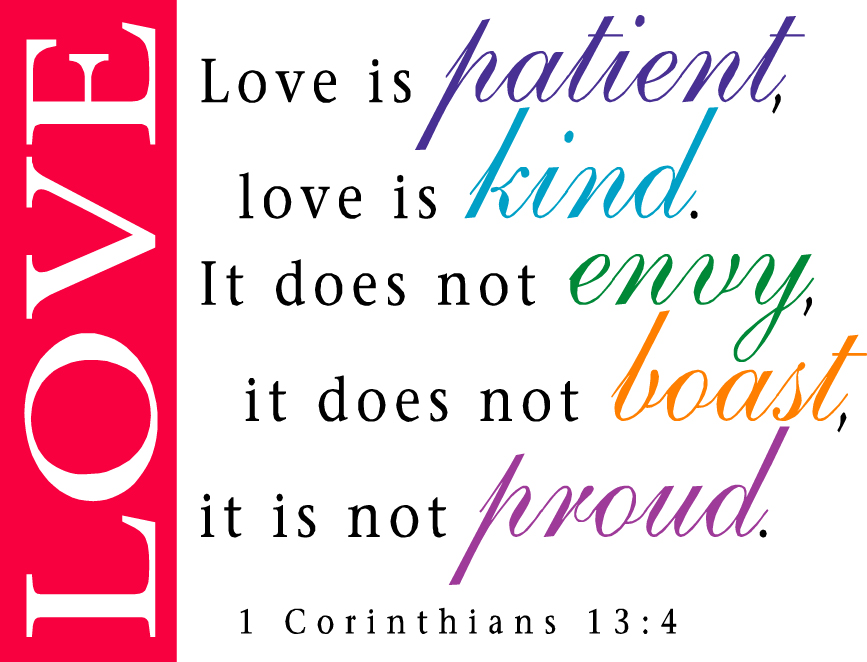 The Love Chapter, 1 Corinthians 13, speaks of a tough love beyond tough love. St. Paul was writing to a contentious congregation which had divided itself into factions. Some members of the congregation laid claim to secret mysteries and esoteric knowledge which put them above the run of the mill members of the congregation. There was a crass moral problem in the congregation which apparently was known to a number of members. To this congregation St. Paul wrote of a love greater than faith or hope–the love of God.
I should say at the beginning that this is an R-rated sermon. Listener discretion advised.
The other day I ran across a comment that the greatest enemies of the anti-abortion movement are the members of the anti-abortion movement. I had reached that conclusion a long time ago. When you see the hatred on the faces of some of the protesters, when you read accounts of the attacks on clinics which perform abortions, it raises questions. My one time boss and long time mentor, the late Cardinal John O’Connor said after a worker at a clinic was killed, “if you have to kill someone, kill me.” I’ve always been highly suspicious of the gigantic numbers quoted by members of the anti-abortion group. Just who keeps count?
No, I’m not in favor of abortions, but before you become a crusader, I think that it may be important to have some contact with a young lady who is the victim of incest. I’ve watched a family implode because of it. You need to sit down and listen to a young woman who has been the victim of rape. These are painful, heart-rending stories. I have a long memory that stretches back before Roe verses Wade to back alley abortions and the high risks that they entailed. It is good to be concerned about the so-called “unborn,” but then you should also be concerned about the “already born.” Children who live in poverty, children who go to bed hungry every night are also worthy of our concern. Susan and I met at a camp for under-privileged children from inner-city Washington, D.C.
The Epistle lesson this morning is one of the best-known and most-loved passages in all of Scripture. It isn’t about the kind of love with which we immediately associate it. The theologians would immediately tell us that this isn’t a passage to be used as a text for a wedding message. I have to confess that I’ve used it as a text for a wedding message on more than one occasion, but we need to understand that this is a tough love beyond tough love. St. Paul was writing to a contentious congregation. It had divided itself up into factions, either as followers of the one who brought them into the faith, or the one who seemed the most appealing. Some claimed to be followers of Apollos, some of Paul, some of Simon Peter. Some said “Phooey on all of you, we are members of the Church of Christ.” There were some in the congregation who claimed a secret, esoteric knowledge that was denied to the general, run of the mill members. Some spoke in tongues. St. Paul didn’t have a problem with that, except they did so in the midst of the church service, which you would have to admit is a little disruptive. There was also a crass moral problem in the congregation, which, apparently, was widely known to the members.
It is all the problems in the congregation that lie behind the opening paragraph of this chapter on love. If I speak in the tongues of mortals and angels and have not love, I’m nothing more than clashing cymbols or a noisy gong. If I understand all of the secret mysteries and have all esoteric knowledge, if I have the kind of faith that moves mountains, and don’t have love, then I’m not a better Christian than everybody else, I’m nothing. If I risk martyrdom, that is hand my body over for burning, and don’t do it out of a sense of love, I really gain nothing. If I’m doing any or all of these things, St. Paul points out, and doing them only to enhance my own reputation, then they are meaningless.
“Let me”, St. Paul says, “show you a better way,” and then he begins to define the kind of love that he is talking about. As many of you are aware, the Greeks of St. Paul’s day had three different words to describe love. The most common was eros, which covered everything from the love between a man and a woman to a mother’s love for her child. They also spoke of phileo, which we would translate as “BBF,” best friend forever. The third word was one that in
classical Greek simply meant “like,” as in I like chocolate [sort of the equivalent of I like to breathe]. St. Paul could take this neutral word and redefine it as the love which God has for His children.
You will notice that as St. Paul begins to spell out this love, it is totally other directed. God’s love is for us. Even when we are talking about the suffering and death of the Lord, the focus is not on the pain that Jesus suffered, but that he suffered and died for you and for me. Everything that the Lord did was directed to our benefit. The law that could only condemn us, he fulfilled on our behalf. The death he died, he died in our place. The resurrection that he experienced, gave us access to a new life—new in the sense of forgiveness here and an opening to an unlimited future.
The love of which St. Paul speaks is willing to take risks. It is patient. Think of how patient God is with us. It is willing to put up with things. Think of all the faults that a wife puts up with her husband, ranging from dirty socks on the floor to toilet seats. Think of all of the faults that a husband puts up with a wife from fried eggplant to another half hour wait before she’s ready to get in the car. St. Paul’s kind of love can shrug these things off. This love hopes that things really will change, even though past experience indicates ‘it ain’t going to happen.” And St. Paul’s kind of love is willing to put up with a lot. Do you detect God’s experience with us lying behind this kind of love? God was willing to risk His only-begotten Son out of love for us.
The kind of love of which St. Paul speaks is unconditional. That’s the part that we have difficulty in understanding. We think in terms of deserving love. Frankly, no one deserves love. Love has to be given. When we talk about grace we always want to add something to it. It’s always grace plus knowing all the right answers, or grace plus being on our very best behavior. At which point God must look a little puzzled. Grace is extended as an expression of God’s love. It isn’t dependent on our behavior, and it isn’t dependent on how knowledgeable we are. God loves us, because God loves us. His definition of love is unconditional love.
So what about questions like abortion? I was at a high level drug/alcohol conference one time. It consisted of people who were on the front line of dealing with the hard cases—counselors from the roughest areas of New York city, Philadelphia, and Newark. Talking about not victims, but active participants, I made the unfortunate comment “they aren’t being responsible.” You could see the response in the eyes of the counselor with whom I was talking: “White boy, you’ve got a lot to learn about life. They have never been responsible in all of their lives. They come from a long line of irresponsibility. Are you going to care about them anyway?” Pastor, would you walk a pregnant fifteen year old girl through a crowd of hostile protesters to the door of a Planned Parenthood Center. Yes, and pray that the counselor would help the girl work her way through to the right thing to do in her situation. And if it hit twitter or facebook, I would probably be looking for a career change, but this kind of love involves being other directed, taking risks, and being unconditional.
Faith, hope, love abide, these three. Faith is for here and now. It calls us to trust implicitly in God and the love that He has for us. Hope is future directed. When the future has arrived, hope is no longer necessary. But love is forever. God’s love stretches throughout eternity. Faith, hope, and love, these three, but the greatest is love.
